
Shelled Sunbathers
Water Turtles
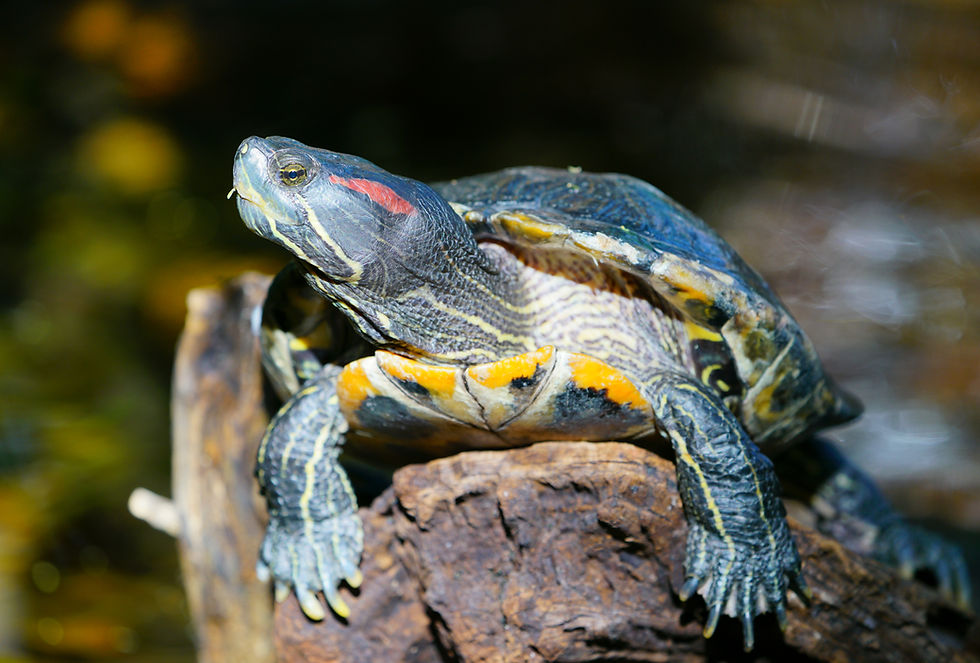
Table Rock Lake is home to several freshwater turtles that thrive in its sheltered coves, rocky outcrops, and calm backwaters. If you’ve ever noticed a sudden plunk as something slipped off a log into the water as your boat approached, chances are you’ve startled a basking turtle — a common but often overlooked resident of this scenic reservoir.
Meet the Residents:
Missouri’s Most Common Lake Turtles
Red-Eared Slider (Trachemys scripta elegans)
The red-eared slider is arguably the lake’s most visible turtle. These mid-sized turtles are easy to spot thanks to the distinctive red or orange stripe behind each eye. They’re avid sunbathers, often seen lined up like soldiers on logs, rocks, or even dock pilings. Red-eared sliders are omnivores and will happily eat aquatic plants, insects, fish eggs, or even bits of bait left by anglers. In Missouri, they’re abundant — and in Table Rock Lake, they’re practically everywhere.
Common Snapping Turtle (Chelydra serpentina)
Lurking beneath the water’s surface with only its eyes and nostrils exposed, the snapping turtle is the lake’s heavyweight bruiser. These prehistoric-looking turtles can grow up to 18 inches long and weigh over 30 pounds. Their strong jaws and tough demeanor make them fascinating — but not friendly — to encounter. Unlike sliders, snappers rarely bask and prefer murky bottoms or submerged debris for concealment. Though they look intimidating, they’re generally shy and would rather retreat than confront humans.
Eastern River Cooter (Pseudemys concinna)
A more streamlined and graceful turtle, the river cooter is often mistaken for the red-eared slider. It has a dark green shell with yellow markings and a strong preference for clean, flowing water — making Table Rock’s clearer tributaries an ideal habitat. Cooters are mostly herbivorous, feasting on aquatic vegetation and algae. They’re shy and quick to dive when disturbed, but they’re frequently seen basking solo on mid-lake rocks or tree stumps.
Missouri Map Turtle (Graptemys geographica)
True to its name, the map turtle’s shell is etched with swirling, map-like patterns that look almost hand-drawn. These turtles prefer rocky shorelines and deeper water, where they hunt small crustaceans and insects. Map turtles are the most skittish of the bunch — good luck getting close. They’re sensitive to motion and will slide off their perch at the slightest hint of approach. However, patient observers, especially those in kayaks or canoes, might catch a closer glimpse.

Life on the Lake: Habitat, Behavior, and Nesting
Turtles are cold-blooded, meaning their activity depends on environmental temperatures. In the summer, they bask to regulate their body heat, and Table Rock offers an abundance of perfect basking spots — from sun-soaked rocks to floating branches. Most turtles here are diurnal, active during daylight hours and retreating into the water to rest or avoid predators.
Spring through early summer is the nesting season. Female turtles often emerge from the water to find sandy or loose soil, where they dig shallow nests and lay their eggs — sometimes near trails, boat ramps, or the edges of campgrounds. Hatchlings emerge late summer to early fall, but many face threats from predators like raccoons, birds, and even fish before they make it back to the water.
In winter, turtles don’t migrate. Instead, they hibernate beneath the surface, burrowed into the muddy lakebed. Their metabolism slows dramatically, and they can absorb oxygen through specialized tissues in their throat and cloaca, allowing them to survive for months without surfacing.
Respecting Their Role

Turtles play a vital role in maintaining the lake’s ecological balance. They help control insect populations, recycle nutrients, and keep aquatic vegetation in check. While it may be tempting to handle or feed a basking turtle, it’s best to observe from a distance. Feeding wild turtles can disrupt their diet and increase risk from predators and human interaction.
Table Rock State Park is one of the best places to spot turtles in action. Whether you’re a nature lover, photographer, or just curious, take a moment this summer to slow down and appreciate these ancient reptiles.
In a world that seems to move faster each year, Table Rock’s turtles offer a reminder: sometimes the best way to experience the lake is at a turtle’s pace.


Comments